I baked my son’s birthday cake

I baked a cake for my older son’s birthday. It probably wasn’t the awesome super hero flashy cake to fulfill his preschool desires, but I was impressed.

I made it from scratch. Nothing but raw ingredients came out of boxes. I even used cake flour to give the cake extra smoothness.

Here’s where I folded in the melted unsweetened chocolate:
img_0705

I slightly screwed up the recipe. At one point, I was supposed to alternate between adding dry and wet ingredients to the base mixture. I added all the dry ingredients before the wet, so I had a really dry, chunky mixture. I had to beat the wet stuff into it longer than I should have, but it came out fine.

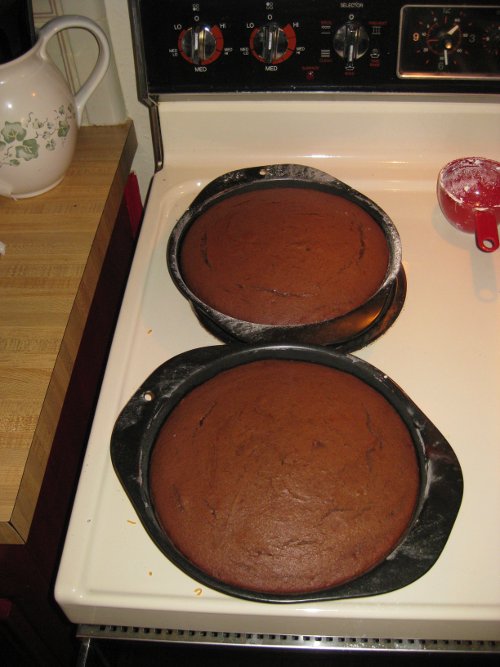
The two cakes after baking:
img_0708
Our oven is really old and doesn’t maintain temperatures well. A third of the way through the baking, I found the oven was 25 degrees too high. A quick temperature change and some oven venting saved the day.

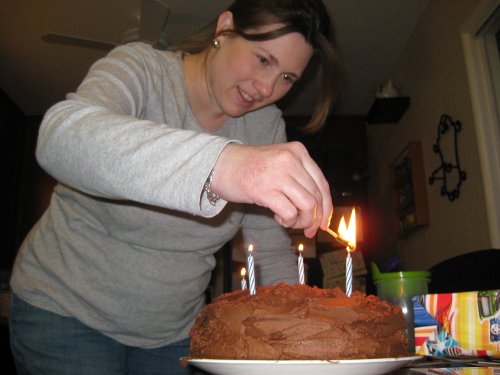
My wife lighting the final product:
img_0709

Yeah, the frosting wasn’t smooth:
img_0718

I made it from scratch, and I made it correctly. I don’t know why it didn’t spread smoothly. Maybe it should have been warmer?

Here’s the inside:
img_0720

Boy, was it delicious! Way better than box mix cake and partially hydrogenated frosting from the tub!

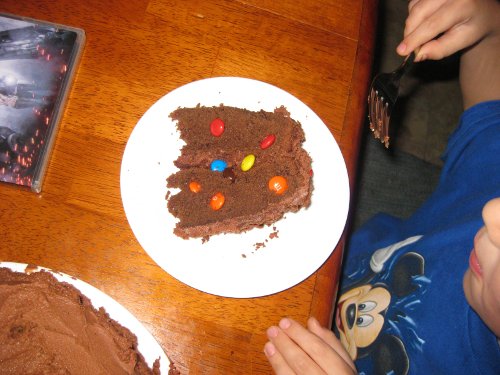
The birthday boy augmented his slide:
img_0719

So maybe it wasn’t a superhero cake. But it had a superhero taste!

Texas’s mythical citizen legislator

The Texas citizen legislator is a partial myth: few ordinary citizens can afford to be a legislator, especially if they face a competitive race.

Evidence is both empirical and mathematical.

Empirical

99.3% of legislators are not ordinary citizens with ordinary employment. My skimming of biographical data and limited statistical sampling finds that all legislators except one are one or more of:

  • Wealthy
  • Have spouse with significant income
  • Attorney, business owner, high ranking officer, or other career that benefits from prestige of being a legislator or has unusual employment flexibility

One exception: Armando Martinez of Weslaco is a firefighter and paramedic.

Source: House of Representatives Biographical Data and individual legislator biographies when the prior reference was not clear.

Mathematical

Why so few ordinary citizens? The math explains.

Prima facie evidence suggests legislators are well paid despite their $600 monthly salary. Include the $168 per diem for the 140 day regular session, and you get gross pay of $37,920 for the 2 year term. An annualized equivalent (divide by 140, multiply by 365) is $98,862. Not bad.

But the mathematics can skew:

Living expenses. The per diem‘s intent is for living expenses incurred while attending a  legislative session. Fortunately, the Texas Ethics Commission allow campaign funds to cover these expense (source). This is critical: if all the per diem had to go to legislative-related living expenses, that would slash the salary to $14,400, or an annualized equivalent of $37,542. But you still must have a substantial campaign fund to pull this off. That takes a lot of work.

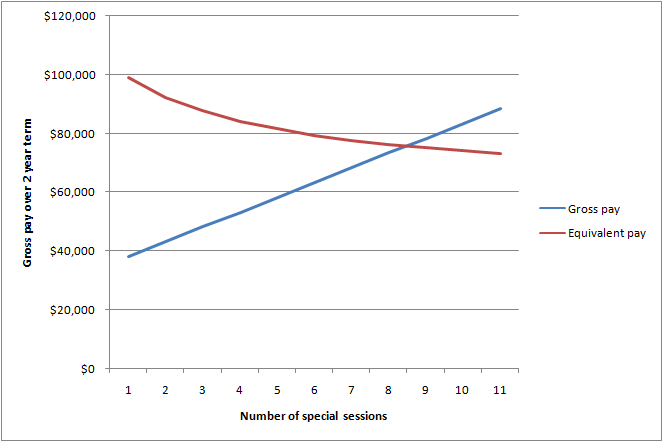
Special sessions. The complexity of issues facing the Legislature are challenging its part time status. For example, the 78 legislature (2003-2004) had four special sessions.

This skews the equivalent annual pay math. Additionally, each special session increases the number of days a legislator can’t work his regular career.

This chart illustrates the pay effect of special sessions, expressed in annualized salary:
legislative_pay

Other events outside of session. Legislators may need to attend occasional committee meetings and other events outside the legislative session. I don’t know if the legislator gets per diem compensation for these, but their effect is to further dilute gross annualized pay similar to special sessions.

Campaigning. This is the killer. If you’re in a competitive district or have a tough nomination fight (or both!), you will probably dedicate a few months just to campaigning. That means you can’t work your “real job.”

I philosophically oppose public campaign financing, so I’m not calling for any official remuneration. Public financing allows too much state control over who can run for office, and raising private money is a good test of one’s support.

The Texas Ethics Commission could help by allowing campaign funds to cover wages and benefits lost while campaigning. Candidates shouldn’t starve, and COBRA is costly!

Without that, it looks like you have to rely on personal funds to compensate for lost wages and benefits.

Conclusion

I admit it: I’d love to be in the legislature. But it’s tough since I’m not in one of the privileged categories. However, it’s not impossible.

Trinity toll road: no, it’s not “see, I told you so”

Naysayers who unsuccessfully tried to shoot down the Trinity toll road erroneously believe they are in the midst of a “see, I told you so” moment. Angela Hunt says “None of [recent challenges are] new to anyone who was paying attention to the toll road debate.  … They were certain about the time line, and now that seems not so certain.”

The toll road’s likelihood is decreasing, but it’s not because of anything the naysayers could really predict!

Did Angela Hunt and Jim Schutze foretell that credit markets would evaporate? Did Angela Hunt and Jim Schutze do the more detailed technical and traffic studies, the ones which are starting to trickle out? Did Angela Hunt and Jim Schutze do geological studies? (Oh, wait, that’s about to start.)

Hardly. They mostly shot from the hip with paranoid conspiracy, greenwashed illogic, or wild guesses.

Let me be clear: there’s a lot about the Trinity system plans that bothers me. Among them is this expensive drainage ditch park, to be build between two tall levees. But I will not cut off my nose to spite my face; the toll road is one of the few productive parts of this boondoggle.

Hopefully everything will work. But if the toll road fails, at least it will fail on its own merits. That’s better than tuck-your-tail-between-your-hind-legs, “give up before we even tried” defeatism.

Party gift bags: who invented that crap?

Every time my son particpates in a birthday party for a daycare classmate, he gets a party bag. Invariably it contains a #2 pencil, erasers, a piece of candy or two, and cheap, plastic junk.

Summary of inevitable outcome:

  • Plastic junk goes in the trash.
  • Bag goes in the trash.
  • We don’t have a pencil sharpener, so pencil goes in the trash.
  • The kid doesn’t use pencils. So we don’t use erasers. So they wander around his room for a couple of days before hitting the trash.
  • Most the time, the candy is nasty and gets trashed.

What purpose do gift bags serve?